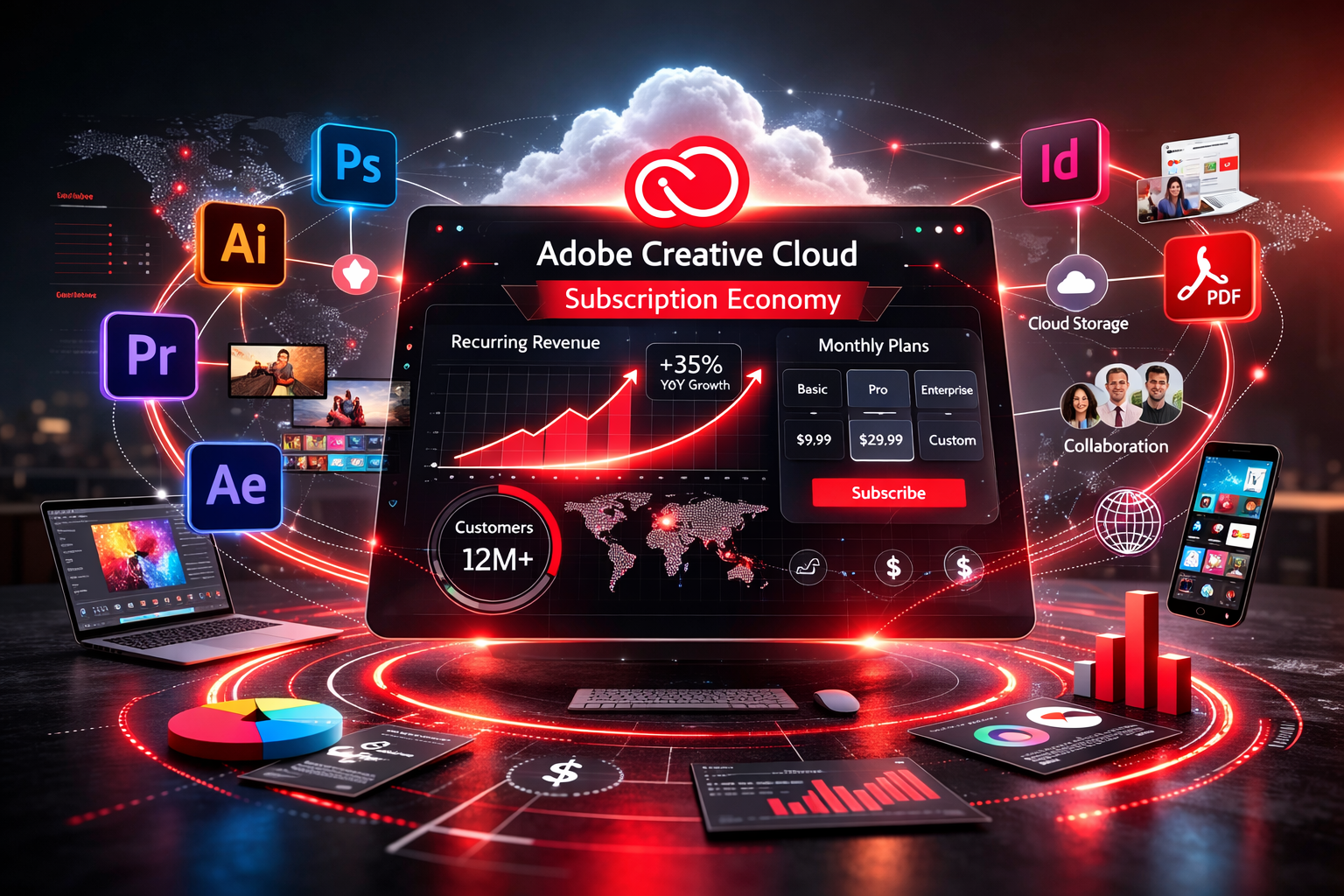
Adobe — Transitioning to the Subscription Economy
Background
Adobe built its reputation through industry-leading creative software such as Photoshop, Illustrator, and Premiere Pro. For years, its revenue model depended on selling perpetual software licenses with periodic paid upgrades.
Challenge
The traditional licensing model created revenue unpredictability and encouraged software piracy. Customers often delayed upgrades, resulting in irregular income cycles. Additionally, cloud-based collaboration tools were beginning to reshape how creative teams worked.
Strategy
Adobe made the bold decision to discontinue perpetual licenses and transition fully to a subscription-based model under Creative Cloud. This shift allowed continuous software updates, integrated cloud storage, and collaborative features. The company also expanded into digital marketing solutions and analytics tools, diversifying its enterprise portfolio.
Results
The subscription model stabilized recurring revenue streams and strengthened long-term customer relationships. Continuous innovation replaced infrequent version-based upgrades, increasing product value and ecosystem stickiness.
Key Takeaway
Moving from transactional sales to recurring subscription models can transform financial stability and customer engagement.