Facebook (Meta) — Reinvention in the Age of AI and Immersive Technology
Background
Facebook emerged in 2004 as a university-based social networking platform and rapidly evolved into one of the world’s largest technology companies. In October 2021, the organization rebranded its parent company as Meta, signaling a strategic shift toward immersive digital experiences and long-term innovation. While the Facebook platform retained its name, the rebrand positioned the company to expand beyond traditional social media.
Challenge
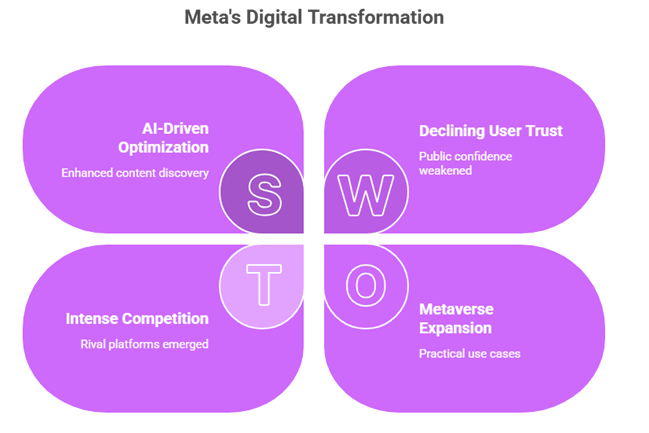
Between 2018 and 2022, Meta faced mounting challenges including data privacy concerns, regulatory scrutiny, declining user trust, and intense competition from emerging social platforms. Public confidence weakened, and engagement patterns began shifting toward short-form and creator-led content on rival platforms. Meta needed to restore relevance, retain its massive user base, and redefine its growth strategy.
Strategy
Meta responded with a multi-layered transformation strategy. The company prioritized artificial intelligence to enhance content discovery, personalization, and advertising efficiency. It expanded creator monetization tools, accelerated short-form video adoption through Reels, and strengthened cross-platform integration across Facebook, Instagram, WhatsApp, and Threads. Simultaneously, Meta refined its Metaverse vision, shifting from speculative concepts to practical use cases in communication, work, and commerce.
Results
By 2025, Meta stabilized user engagement across its platforms and strengthened its position in digital advertising through AI-driven optimization. Creator ecosystems matured, short-form video became a core engagement driver, and AI-powered tools improved user experience and advertiser ROI. While the Metaverse evolved more gradually than initially anticipated, it established a foundation for long-term immersive technology development.
Key Takeaway
Meta’s journey highlights the importance of adaptability in the digital economy. By embracing AI, diversifying platform experiences, and realigning long-term vision with practical innovation, Facebook and its parent company Meta successfully navigated industry disruption and positioned themselves for future growth.