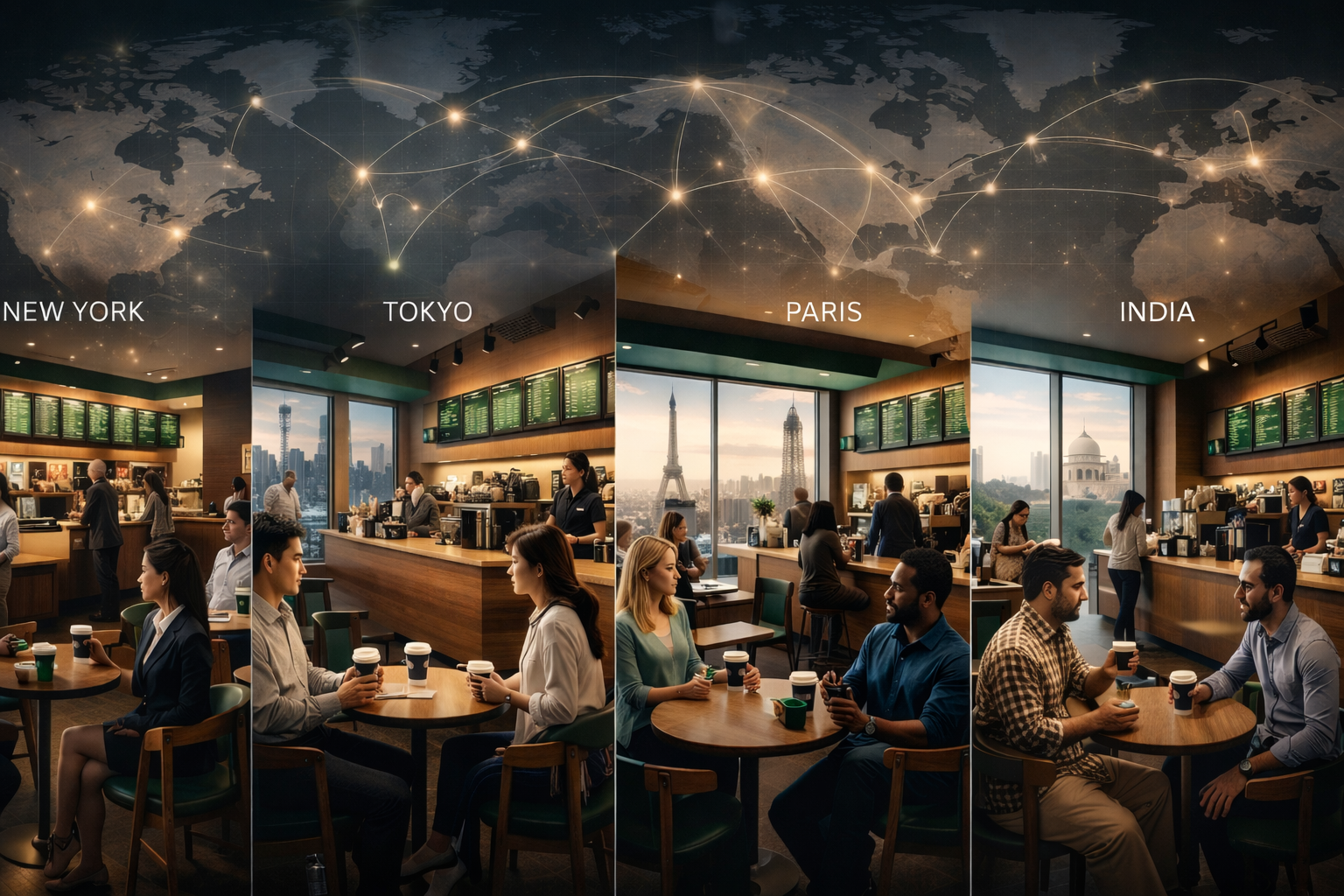
Starbucks — Experience Standardization in a Global Brand
Background
Starbucks built its global expansion on the concept of the “third place” — a comfortable space between home and work. Rapid international growth allowed Starbucks to dominate premium coffee retail across multiple markets.
Challenge
As store numbers grew, maintaining consistent service quality became difficult. Overexpansion led to operational strain, diluted customer experience, and reduced brand exclusivity. Economic downturns further pressured discretionary consumer spending.
Strategy
Starbucks implemented a strategic recalibration. Under leadership restructuring, the company temporarily closed stores to retrain baristas and reinforce service standards. It invested heavily in digital transformation, launching a mobile app with integrated loyalty rewards and mobile ordering capabilities. This improved convenience while collecting valuable consumer data.
Additionally, Starbucks refined store design strategies to maintain local relevance while preserving brand consistency. Supply chain efficiencies were enhanced to stabilize cost structures.
Results
Starbucks strengthened customer retention, improved operational control, and integrated digital convenience into its premium brand positioning.
Key Takeaway
Scaling a service-based brand requires constant reinvestment in operational consistency and customer experience.