You can spend months getting your website to rank on Google, and still get completely skipped when someone asks ChatGPT or Perplexity the exact same question. That’s not a bug, it’s because AI systems don’t read your website the way Google does. They evaluate content on a different set of rules entirely, and most websites are still only built for the old ones. Here’s what’s actually different, and how a modern SEO strategy in Chennai needs to account for it.
How Google Reads Your Website
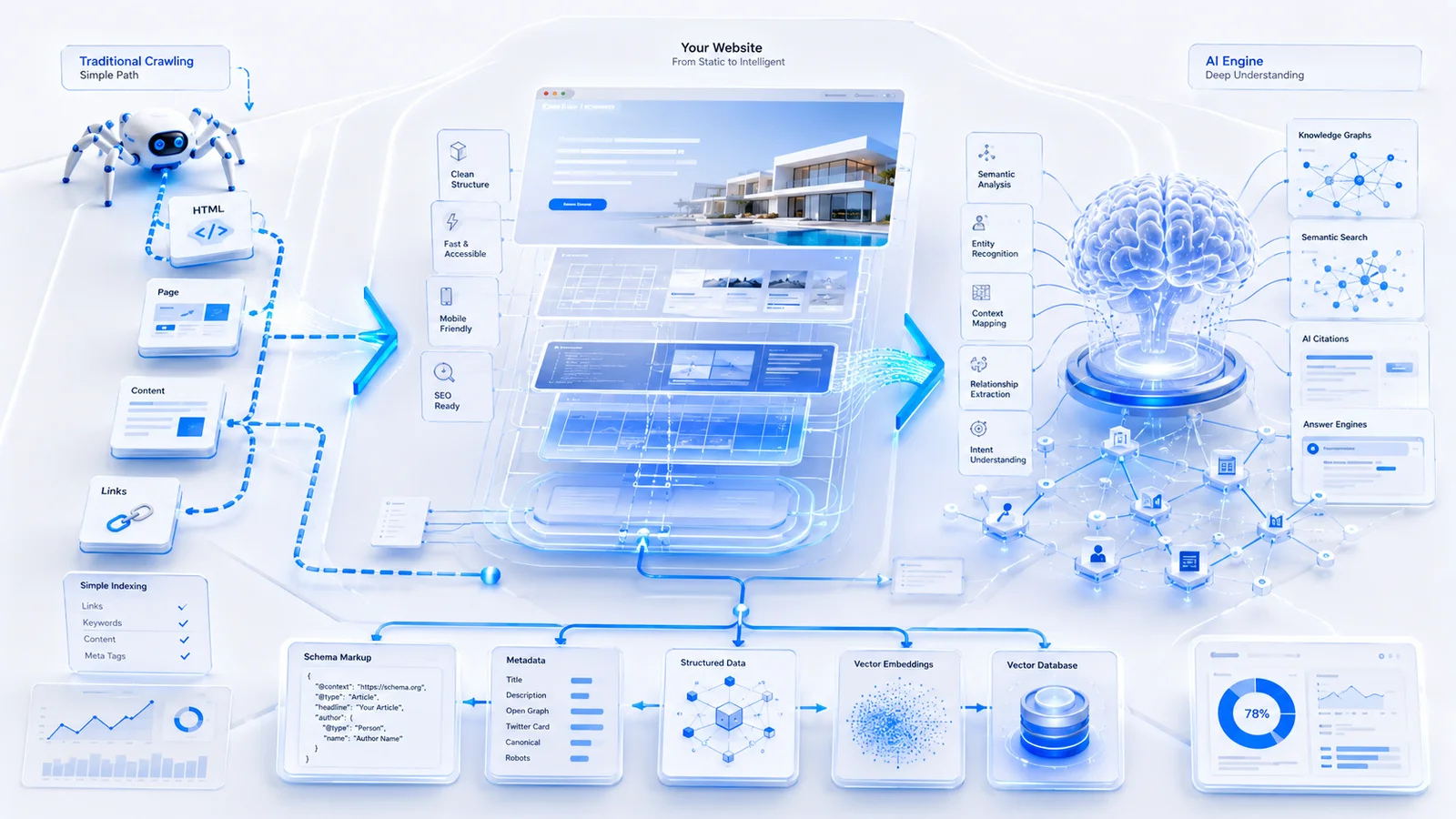
Google’s crawlers are built to index pages, matching them to keywords, evaluating backlinks, and ranking based on hundreds of authority and relevance signals. It’s largely a matching game, find the pages most relevant to a query, then rank them by trust and quality signals. Your job as a marketer has traditionally been to optimize for that matching process, keywords in the right places, solid technical structure, and enough authority to outrank competitors.
How AI Actually Reads Your Website
AI answer engines like ChatGPT, Perplexity, and Google’s own AI Mode work differently. Instead of returning a list of ranked pages, they synthesize a single answer by pulling facts, definitions, and explanations from multiple sources at once. That means your content isn’t just competing to rank, it’s competing to be quotable.
Matches pages to keywords and ranks them by authority and relevance signals.
Synthesize one answer from many sources, favoring content that is clear and quotable.
A few things AI systems weigh heavily that traditional SEO doesn’t always prioritize: how clearly a page answers one specific question, whether the information is stated in a way that can be lifted and repeated accurately, and how consistently a source covers a topic across multiple pages rather than just one. A page can rank #1 on Google and still get ignored by an AI engine if it buries the actual answer under long introductions, vague phrasing, or content built purely to satisfy keyword density.
Why This Matters More Every Month
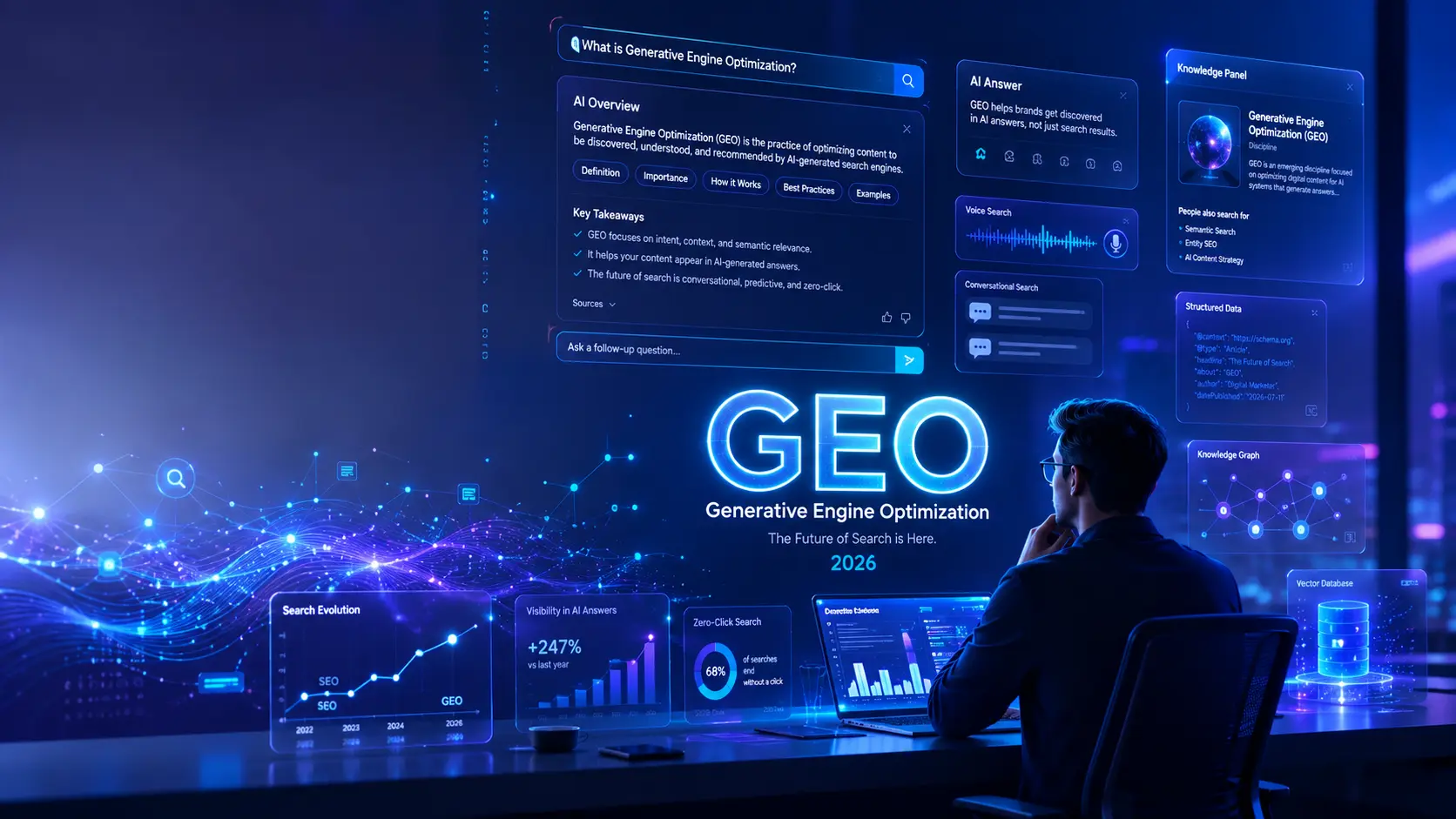
This isn’t a minor shift. At the start of 2026, roughly 68% of Google searches ended without a single click to any website, up from just 45% in 2016. Out of every 1,000 typical searches, only about 232 actually result in a click leaving Google’s ecosystem, the rest get answered directly on the results page or inside an AI Overview.
At the same time, real money is already moving into this space. Verified ad-intelligence tracking now estimates roughly $200 billion in annual media investment flowing into advertising on AI platforms like ChatGPT and Perplexity, a channel that barely existed as paid media a year ago. Brands and advertisers alike are treating AI answer surfaces as a serious discovery channel, not a side experiment.
How to Fix It: Making Your Content AI-Readable
- Lead with the answer, not the setup. Put the direct answer to the reader’s question in the first sentence or two of a section. Save the context and backstory for after.
- Write in clear, standalone statements. AI systems tend to lift sentences that make sense on their own, without needing the paragraph around them for context.
- Use structure AI can parse easily. Headings, bullet points, numbered steps, and clearly labeled sections are far easier to extract from than dense narrative paragraphs.
- Cover a topic completely, not just one keyword. AI engines favor sources that demonstrate depth across an entire subject, not a single page optimized around one search term.
- Back up claims with specific facts. Concrete numbers, dates, and named details are more likely to be quoted accurately than vague, general statements.
- Don’t drop SEO fundamentals. Technical performance, backlinks, and quality content are still the foundation, this is an added layer on top, not a replacement. Services like SEO, content marketing, and social media marketing all need to work together under this new standard.
This Practice Has a Name: GEO
Optimizing content specifically so AI engines cite, summarize, or recommend your brand is called GEO, Generative Engine Optimization.
Search industry events are already reshaping their agendas around this exact shift, treating it as the defining conversation in marketing this year. It isn’t hype, it’s a direct response to how people are actually searching now.
Conclusion
Google and AI answer engines are no longer reading your website the same way, and treating them as one and the same is exactly why so many businesses are quietly losing visibility without realizing it. Fixing this isn’t about starting over, it’s about restructuring what you already have so both systems can find, trust, and repeat it.
If you’re not sure how your content currently performs in AI search results, it’s worth having a conversation with a results-driven digital marketing agency in Chennai to find out, and fix it before your competitors do.
Not sure how AI sees your website?
Get a free audit of your content, search visibility and AI readiness, with a clear plan to fix it.
Frequently Asked Questions
Why doesn't AI read my website the same way Google does?
Google ranks pages by matching keywords and evaluating authority signals like backlinks. AI answer engines synthesize a single response from multiple sources, favoring content that clearly answers a specific question and can be accurately extracted or quoted.
Can a page rank well on Google but still be ignored by AI tools?
Yes. A page can rank #1 on Google and still get skipped by an AI engine if the actual answer is buried under long introductions, vague phrasing, or content built mainly around keyword density rather than a clear, quotable answer.
What's the fastest way to make my content more AI-friendly?
Lead with the direct answer at the start of each section, use clear headings and bullet points, and write standalone statements that make sense without needing the surrounding paragraph for context.
Do I need to rewrite my entire website for AI search?
Not necessarily. Most of the time it's about restructuring existing content, clarifying answers, improving headings and formatting, rather than starting from scratch. Strong SEO fundamentals stay the same, this adds a layer on top.
What is GEO and how is it different from SEO?
GEO, Generative Engine Optimization, focuses on making content easy for AI engines to cite and summarize. SEO focuses on ranking in traditional search results. The two work together rather than replacing one another.
Can an agency help fix how AI reads my website?
Yes. An experienced agency can restructure content for clarity, improve topical depth, and monitor how your brand appears across AI platforms, integrating GEO directly into your existing SEO and content strategy.