If you’ve noticed your organic traffic sliding even though your rankings look fine, you’re not imagining it. The search game has quietly changed shape, and the term everyone in digital marketing is racing to understand right now is GEO — Generative Engine Optimization. If your business is trying to stay visible in this shift, it’s worth talking to a specialist SEO team in Chennai that already understands how AI search is changing the rules.
The Number That Should Worry You
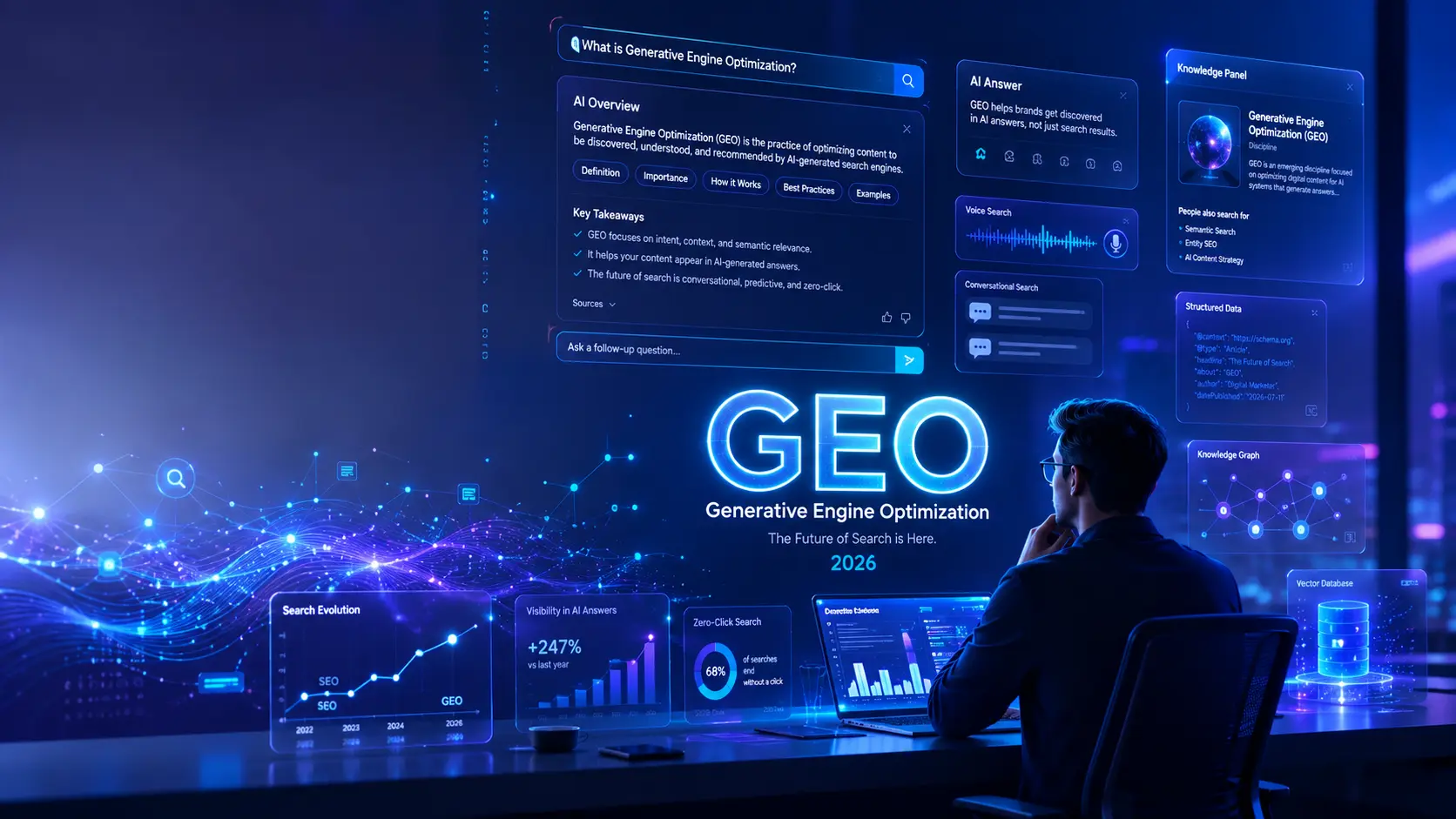
At the start of 2026, roughly 68% of Google searches end without a single click to any website. Compare that to just 45% back in 2016, and the trend line is obvious: people are getting their answers directly inside the search results, AI Overviews, and chat-based assistants, never leaving the platform at all.
Break down 1,000 typical US Google searches today and the picture gets sharper: only about 232 searches actually result in a click that leaves Google’s ecosystem. A large chunk are absorbed directly into AI Mode or Google-owned properties, and the rest end the session with no click at all, or trigger another search.
For years, SEO was about ranking #1. Now ranking #1 doesn’t guarantee anyone ever visits your site.
Why “GEO” Is Becoming the Hottest Search Term in Marketing
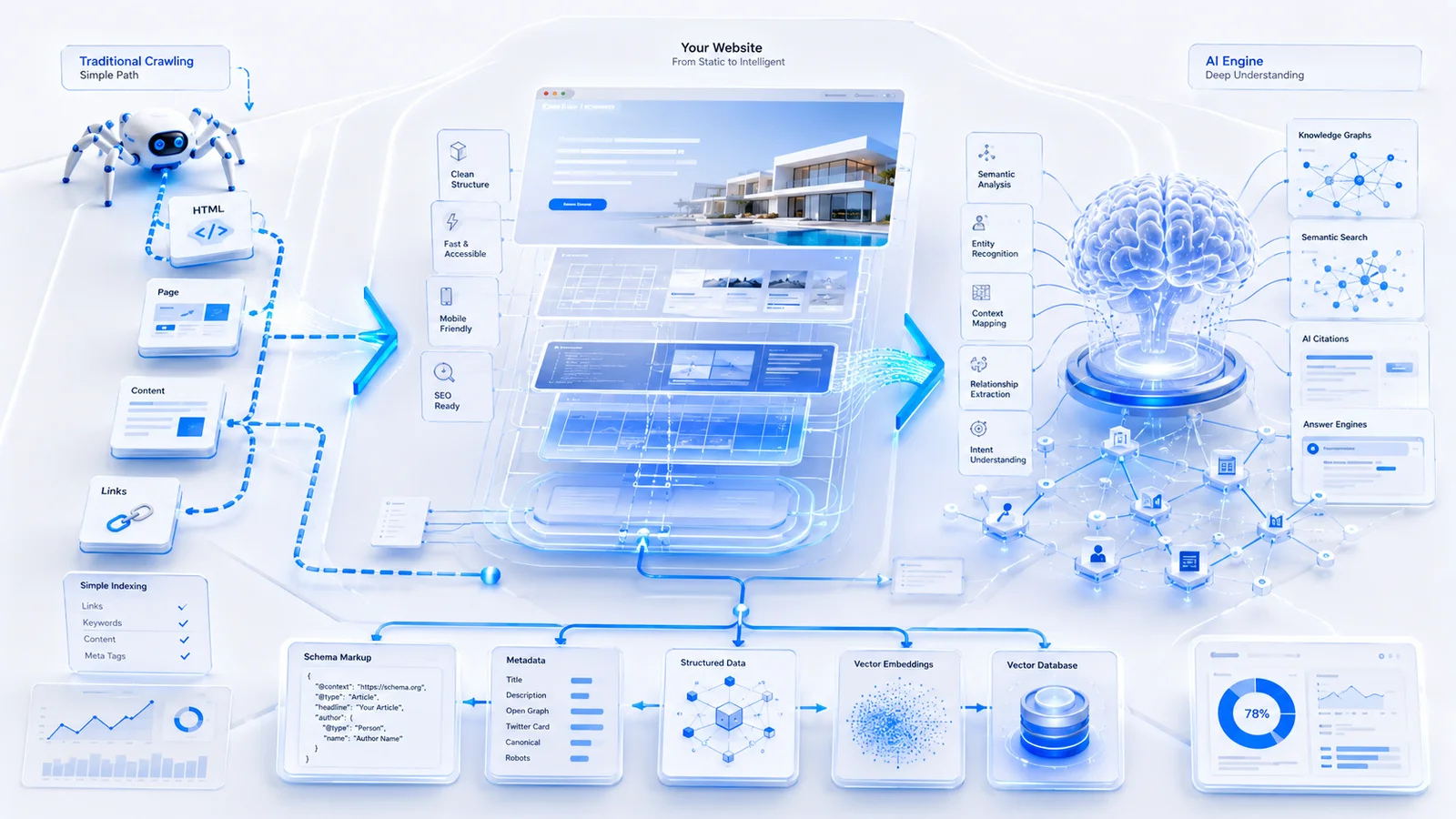
Generative Engine Optimization is the practice of optimizing content not just for search engine crawlers, but for AI answer engines, ChatGPT, Perplexity, Google’s AI Mode, and similar tools that summarize, cite, or recommend brands directly inside a conversation instead of a list of blue links.
Optimizes content for search engine crawlers and a place in the list of blue links.
Optimizes content so AI answer engines cite, summarize, or recommend your brand in the answer.
This shift is showing up everywhere in industry conversations right now:
- Ad spend is following the eyeballs. New ad-intelligence tracking now captures verified, transaction-level advertising spend flowing into AI platforms like ChatGPT and Perplexity, representing an estimated $200 billion in annual media investment globally. That’s real money moving into a space that barely existed as an ad channel a year ago.
- Referral traffic patterns are flipping. Some platforms are seeing AI-driven referral traffic jump dramatically as chat tools surface links more prominently in their answers.
- How you phrase things matters more than ever. Early research suggests the exact wording of a query heavily influences whether a brand gets mentioned in an AI-generated answer, with broad category searches favoring big, trusted brands over niche players.
- Conferences are rebranding around it. Search industry events this year are explicitly framing their agendas around the GEO-versus-SEO conversation, treating it as the defining tension of the year.
What This Means for Your Content Strategy
- Stop optimizing purely for rankings. Being #1 on a page nobody scrolls to is a hollow win. Optimize for being the answer, not just a result.
- Build topical authority, not just keyword density. AI systems tend to pull from sources they trust across a whole topic, not a single perfectly-optimized page.
- Make your content quotable and structured. Clear definitions, direct answers, and well-organized facts are easier for generative engines to extract and cite.
- Track a new metric. Clicks alone won’t tell the full story anymore, start paying attention to brand mentions and citations inside AI answers, not just your search console dashboard.
- Don’t abandon SEO, layer GEO on top of it. The two aren’t competitors; they’re becoming the same discipline with a wider surface area. Services like SEO, content marketing, and social media marketing all need to adapt together rather than in isolation.
Conclusion
If there’s one keyword worth searching, reading about, and building a strategy around right now, it’s GEO (Generative Engine Optimization). The brands figuring this out early, treating AI platforms as a real discovery channel rather than a threat to ignore, are the ones positioning themselves to still be found in a search landscape where fewer and fewer searches end in a click at all.
If you’re not sure where your brand currently stands in AI-generated answers, it’s worth having a conversation with a results-driven digital marketing agency in Chennai to see how a GEO-ready strategy could work for your business.
Ready for a GEO-ready strategy?
Get a free audit of your content, search visibility and AI readiness, with a clear plan to improve it.
Frequently Asked Questions
What is GEO (Generative Engine Optimization)?
GEO is the practice of optimizing content so that AI answer engines like ChatGPT, Perplexity, and Google's AI Mode are more likely to cite, summarize, or recommend your brand directly inside a conversational answer, rather than just ranking your page in a traditional search results list.
What is a zero-click search?
A zero-click search happens when a user gets their answer directly on the search results page, or inside an AI-generated summary, without clicking through to any website. At the start of 2026, these accounted for roughly 68% of all Google searches.
Is GEO replacing SEO?
No. GEO builds on top of SEO rather than replacing it. Strong technical SEO and quality content remain the foundation, GEO simply adds a layer focused on making that content easy for AI systems to extract, trust, and cite.
How do I know if my brand is showing up in AI search answers?
Traditional search console data won't show this. You need to manually test relevant queries in tools like ChatGPT, Perplexity, and Google's AI Mode, or work with an agency that tracks brand mentions and citations across AI platforms.
Why are brands spending on AI platform advertising now?
As more discovery moves into AI answer surfaces, advertisers are following their audience there. Verified transaction-level tracking now estimates around $200 billion in annual media investment flowing into AI platform advertising globally.
How can a digital marketing agency help with GEO?
A good agency will restructure your content for clarity and topical authority, monitor how your brand appears in AI-generated answers, and integrate GEO alongside your existing SEO, content, and social strategies rather than treating it as a separate silo.